Three tips that will get your cosmetic practice recommended by AI
Summary: Your potential patients are looking for your practice on Google and Chat-GPT. The quality of your website content, your online reputation and how many other websites link to yours are the main contributing factors in determining if you appear at the top of search results or get cited by Chat-GPT.
The search landscape has changed greatly in 2026 with many users forgoing “traditional” search engines like Google for AI tools like Chat-GPT. But don’t let the headlines fool you – SEO is still by far and away the most effective way to reach new clients organically. The difference now is that SEO includes ai chat tools as well.
Google averages just under 14 billion daily searches according to TechCrunch while Chat-GPT recieves 2.5 billion prompts.
For cosmetic surgery practices looking to draw in new prospects, the safe bet is to be visible in BOTH search and AI.
But accomplishing this is much easier said than done.
In this blog we’ll go over what SEO and AI SEO are and how cosmetic surgery practices like yours can get to the top of your local search results pages.
What is SEO?
SEO or Search Engine Optimization is the act of making a website or website content with the intention of ranking higher in search engines like Google or Bing.
There are several different subsects of SEO that are important to understand to make sure your search strategy is addressing all the ways a user could come into contact with your website.
- Local search
- Google Business Profile
- AI SEO
Local seach or local SEO involves optimizing your website content for keywords that have geographic locations attached to them. So instead of “rhinoplasty specialist” you would target “rhinoplasty specialist in Seattle.”
Generally, adding a location to a keyword makes it much easier to get onto page one. It also increases the quality of the leads you get as you may not want to get leads from prospects who are in different states or even different cities as it can be harder to get them to come to follow-up appointments.
Your Google Business Profile is Googles first point of contact with your practice so it’s important to make sure it’s optimized, has a steady supply of reviews and other activity signals Google uses as proof your practice is real.
We’ll talk more in depth about Google Business profile later on.
Finally, AI SEO is a relatively new concept that still isn’t an exact science. AI SEO is Artificial Intelligence Search Engine Optimization, or creating website content with the purpose of having your practice recommended by LLMs like Chat-GPT or even to appear in Google AI Overviews at the top of Google search result pages.
What is AI SEO and how your Practice can Use It
In case you skipped ahead, Artificial Intelligence Search Engine Optimization is the practice of creating website content that targets Chat-GPT and Google AI Overviews.
When a user asks Chat-GPT or another LLM a question in the form of a prompt, usually that LLM needs to look on the internet to gather a consensus about the answer to that users question.
In AI SEO, a citation is when your website is used as a source for an answer to a prompt. There are some cases where your practices name could even be the answer to a users prompt. For example if someone were to search “What are the best cosmetic surgery practices in New York?” Influencing LLMs to say that your practice is the best, is the goal of AI SEO.
There are several strategies that digital marketers use to increase the likelihood of this happening:
Reverse Engineering Query Fan Outs
When Chat-GPT receives a prompt that requires it to present an answer that is based on opinion and not fact it performs something called a “query fan-out.” What it is literally doing is creating a consensus about the answer to a question by running several searches online that are related to a users original question.
This is how AI creates the illusion of knowing everything there is about everything.
For example if a person searched for “best facelift in Tacoma” a query fan out might involve searching for:
Best eyebrow lift in Tacoma
Facelift reviews for Tacoma cosmetic surgery practices
How to pick the right doctor for a facelift
How does our agency use this information in practice? We would create content that could rank for searches like these; for example a blog on “How to pick the right doctor for a facelift.”
The more often an LLM finds your website during its query fan out, the higher the likelihood it will recommend you in it’s answer.
If you need help with any of these concepts feel free to give us a call (888) 502-8543.
Reverse Engineering Citations
Another strategy is looking at the websites that are already being cited by LLMs and trying to see if you can get your practice mentioned in those places.
You can do this experiment yourself. Type a prompt into Chat-GPT and once it answers, click on “View Sources.”
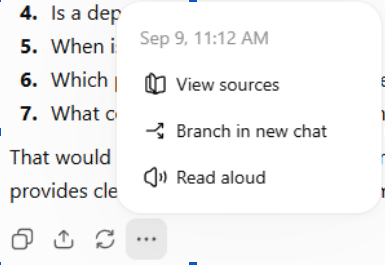
When we do this process for clients we reach out to websites that are already being cited and see if we can have our clients names added to those websites.
Sometimes we might need to make the case for why our client deserves to be in a spot instead of a local competitor or even in some cases pay the website manager to remove that competitor.
We may also write new articles or pages to compete with pages that are currently being cited in order to win that spot from a competitor.
Already have an SEO agency helping you with this? Ask them what their strategy is for targeting query fan outs. If they don’t have an immediate answer, consider that a red flag in the modern AI era.
Concensus Management AKA Actually Being the Best!
Sometimes the most reliable way to make sure your practice is getting recommended by AI is by undeniably being the best in your community.
AI uses UGC or user generated content to develop an opinion on your practice. This could be a a review on a platform like your Google Business Profile or Yelp, a press release or blogs reviewing your practice.
Reviews have always been important but they are now more valuable than ever as LLMs are actively reading them to decide whether or not to recommend your practice to new patients!
We help our clients manage their online reputation by helping them execute strategies to get more reviews from their current clients, write articles for press releases in local news outlets and contact guest bloggers online to write about your practice.
If your current digital marketing agency has no PR capabilities at all, it’s not possible for them to do a complete job when it comes to approaching AI SEO.
Local SEO and the Importance of your Google Business Profile
Your Google Business Profile is Googles first point of contact with your practice, making it the single most important asset for your digital identity.
So how do you get the most out of it? As a digital marketing agency with over 20 years of experience, here are the top three areas we look at first when optimizing a new clients profile.
Google Reviews
Google reviews are important for both traditional SEO and AI SEO. While total amount of reviews is important, it’s important to know that what google is looking for in your profile over anything else is “activity.”
They want proof that your practice is real and actively serving patients.
Because of this, frequency is more valuable than total amount of reviews. So if you’re able to consistently get two or three reviews a week you will notice your practice appearing higher in the map pack than competitors who may have more reviews than you but get them less frequently.
At Cosmetic Surgery Marketers, we offer a Google Review Management tool that comes free with all of our SEO service tiers because reviews are just that important for our clients success.
Service Type and Service Area
These two things are the two most commonly sources of mistakes on GBPs.
Your primary Business Category should be set to the most high level term possible that accurately describes your services. Generally this will just be “cosmetic surgeon.”
When it comes to secondary categories, you can have as many or as few of these as you like, but you want to pick categories that are as closely related to your primary category as possible.
After this, just make sure you have info entered for every option in your profile including holiday hours and accessibility options.
Adding Activity Signals like Photos and Posts
While reviews are the most valuable activity signal you can have on your GBP, there are other ways that don’t require your clients to take action on your behalf.
You can post pictures on your profile of your office and staff or add updates to your profile in the form of posts.
If you have an upcoming promotion or event at your practice, consider adding a post about it. If a prospect finds your listing in the map pack, seeing an offer like that could be the difference between them calling you or a competitor.
Need help optimizing your Google Business Profile? We can help.
When does it make sense to hire an agency for SEO?
Most cosmetic surgery practices don’t have anyone on staff whose full time job is SEO. The front desk manager or a part time marketing hire ends up handling website updates, blog posts, and Google Business Profile changes between patient calls and scheduling.
Keeping on top of all of the strategies we talked about earlier in this blog is impossible for someone who also has a full time job running an office or serving clients.
An agency makes sense when the practice needs consistent, ongoing work that nobody internally has the time or specialized knowledge to do well.
Though we didn’t cover it much in this blog, digital marketing agencies like ours can also handle technical fixes to your website like site speed and mobile usability, building out procedure pages that actually target what patients search for, and keeping local listings accurate across Google Maps and Apple Maps.
In fact, all of our SEO service tiers include technical support for your website, making sure all of your content is readable by search engines and AI website crawlers.
What Makes Cosmetic Surgery Marketers the Best choice for SEO Services
Ranking well today means showing up in Google search, the map pack, and increasingly the answers AI tools give patients researching a procedure. That takes local SEO, an actively managed Google Business Profile, and content built specifically to get cited by LLMs, not just generic web copy.
Local SEO for Cosmetic Surgery: We’ve been doing SEO for cosmetic surgery practices since 2003, so we already know which keywords, page structures, and content actually move the needle for procedures like facelifts, rhinoplasty, and body contouring, instead of applying a generic local SEO playbook.
Google Business Profile Management: Every one of our SEO service tiers includes our Google Review Management tool at no extra cost, which helps clients build the steady stream of reviews Google actually rewards instead of a slow trickle that gets outranked by more active competitors.
AI SEO and Query Fan-Outs: Most agencies can’t tell you their strategy for query fan-outs or LLM citations, but we actively reverse engineer both, building content designed to get your practice recommended when a prospective patient asks ChatGPT or Google AI Overviews for the best option in their area.
Ready to make sure your practice shows up everywhere patients are searching, on Google and in AI? Contact Cosmetic Surgery Marketers today for a free consultation, or call us at (888) 502-8465 to see which SEO plan fits your practice.
Frequently Asked Questions
How long does it take to see results from SEO?
SEO is a long term strategy, not a quick fix, and most practices start seeing meaningful movement in rankings after three to six months of consistent work. Factors like how competitive your local market is and how much content and technical work your site needs going in can speed this up or slow it down. Practices that stay consistent with reviews, local listings, and content over time tend to see steadier long term results than those looking for a fast win. At Cosmetic Surgery Marketers, we set realistic timelines upfront and show progress through monthly reporting so you always know where your campaign stands.
Do I still need traditional SEO if patients are using ChatGPT to find a surgeon?
Yes, traditional SEO and AI SEO work together rather than replacing one another. Google still handles billions of searches a day, and AI tools like ChatGPT often rely on the same well optimized, well cited websites when forming their answers. A strong SEO foundation, meaning solid content, technical health, and local optimization, is what makes a site more likely to be pulled into an AI answer in the first place. We build our SEO strategies to support both search engines and AI tools at the same time, so practices don’t have to choose one over the other.
How many Google reviews does my practice actually need?
There isn’t a magic number, since Google cares more about consistent activity than a high total count. A practice getting two or three new reviews a week will often outperform a competitor with more total reviews but a slower, less consistent pace. This is because Google reads frequent reviews as a signal that a practice is active and genuinely serving patients right now. That’s why every SEO tier we offer includes a review management tool built to keep that flow steady instead of leaving it to chance.
How do I know if my current agency is actually doing AI SEO?
Ask them directly what their strategy is for targeting query fan outs and getting your practice cited by LLMs like ChatGPT. If they can’t give you a clear, specific answer, that’s a sign they’re only offering traditional SEO under a new label. A real AI SEO strategy involves researching the follow up questions AI tools ask themselves, building content around those questions, and actively working to get a practice mentioned on websites AI tools already cite. Our team does both of these as a standard part of every SEO campaign, not as an add-on service.

About Bob Ottaway
Bob Ottaway, is President and Founder of Ottaway Digital, the parent company of Cosmetic Surgery Marketers. Established in 1999, it has been a pioneer in SEO, digital advertising & social media since 2006.